

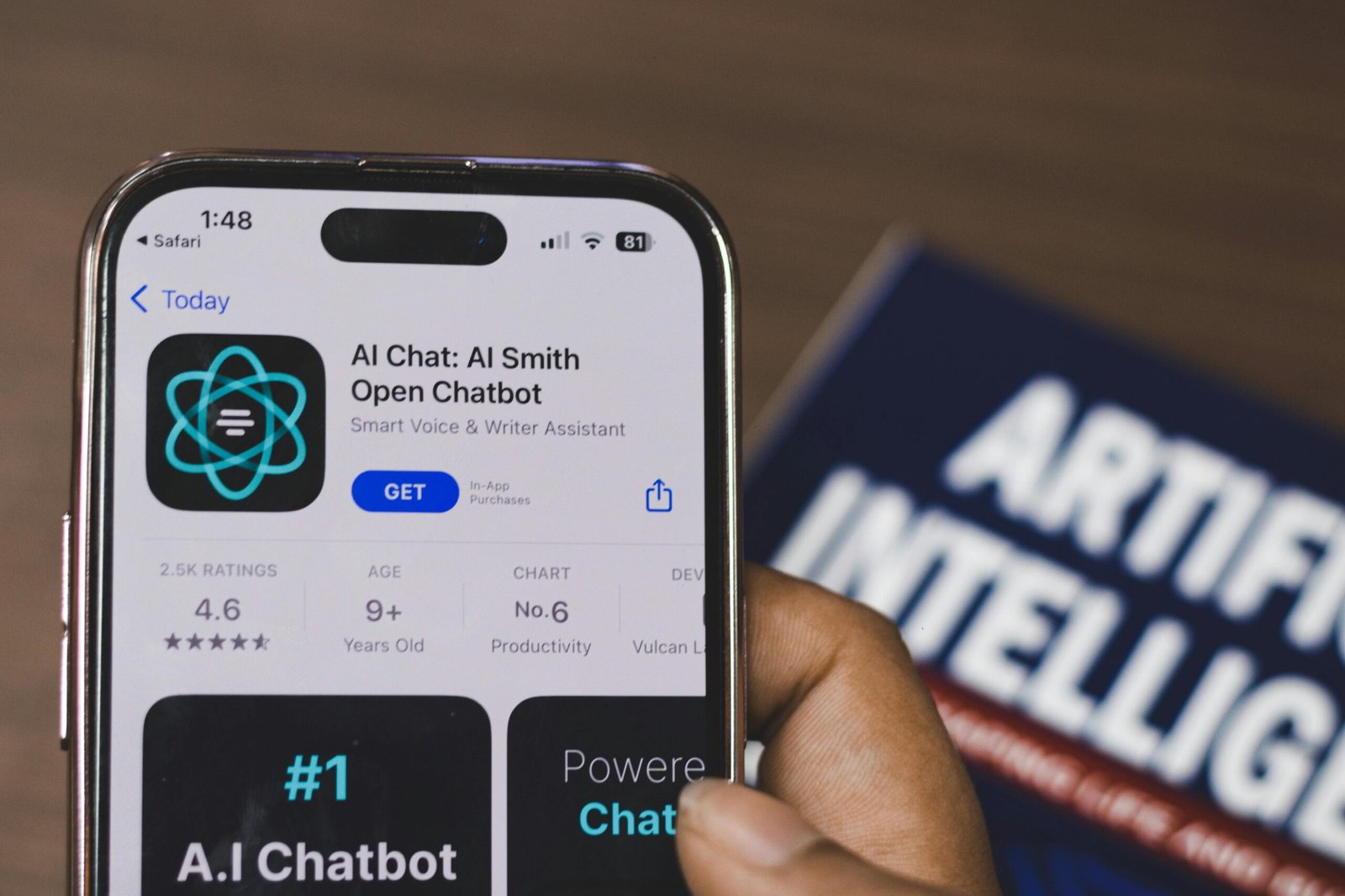
AI Evolution Artificial intelligence is no longer just a futuristic buzzword whispered in tech conferences or science fiction movies. Today, it is reshaping industries, redefining productivity, and transforming the very nature of human work. For decades, machines were designed primarily to automate repetitive tasks. However, the story of AI has undergone a dramatic evolution. Instead of simply following rules or executing scripts, modern AI systems can analyze data, learn from patterns, adapt to new situations, and even generate creative ideas.
The shift from automation to intelligence marks one of the most profound technological transformations in human history. What began as simple rule-based software has grown into complex systems capable of understanding language, recognizing images, predicting outcomes, and making strategic decisions. This transformation has been accelerated by the rapid growth of computing power, the availability of massive datasets, and the development of sophisticated algorithms.
The recent AI boom of the 2020s has pushed artificial intelligence into everyday life—from voice assistants and personalized recommendations to autonomous vehicles and advanced medical research. According to industry data, AI adoption has skyrocketed, with consumer usage of AI tools rising from 8% in 2023 to 38% by 2025, showing just how quickly this technology is becoming mainstream. (Wikipedia)
But the evolution of AI is not merely about doing tasks faster or cheaper. It is about creating systems that can reason, collaborate with humans, and operate autonomously in complex environments. In other words, AI is moving beyond automation into a new era of intelligent capability.
Let’s explore how artificial intelligence reached this point—and where it might take us next.
Understanding the Rise of Artificial Intelligence
What Artificial Intelligence Really Means Today
Artificial intelligence today refers to computer systems capable of performing tasks that typically require human intelligence. These tasks include recognizing patterns, interpreting language, solving problems, learning from experience, and making decisions. However, the meaning of AI has evolved significantly over time.
In the early days, AI was limited to rule-based systems. Engineers programmed explicit instructions, and the computer simply executed them. Think of it like a recipe: if condition A happens, perform action B. While this worked for structured problems, it quickly broke down when dealing with real-world complexity.
Modern AI, on the other hand, relies heavily on machine learning, where algorithms learn patterns from data rather than being explicitly programmed. This approach allows systems to improve performance over time, much like humans learn through experience.
Today’s AI systems power technologies that many people interact with daily:
- Recommendation engines on streaming platforms
- AI-powered chatbots in customer service
- Language translation tools
- Fraud detection in banking
- Medical image analysis
The defining feature of modern AI is adaptability. Instead of following rigid rules, these systems continuously refine their predictions based on new information.
The difference between old and new AI is like comparing a calculator to a human assistant. A calculator performs predefined operations flawlessly, but it cannot understand context or adapt to new problems. AI, however, is beginning to demonstrate a form of flexible intelligence.
And that shift is the foundation of AI’s evolution beyond automation.
The Early Days of AI and Rule-Based Systems
To appreciate how far artificial intelligence has come, it helps to understand where it started. The roots of AI date back to the 1950s when researchers first began exploring the idea that machines could simulate human intelligence.
Early AI systems were known as expert systems. These programs relied on large sets of rules crafted by human experts. For example, a medical diagnostic system might include thousands of rules about symptoms and diseases. If a patient showed certain symptoms, the system would recommend possible diagnoses.
While these systems were impressive at the time, they had significant limitations. They struggled with ambiguity, lacked learning capabilities, and required constant manual updates.
This period was followed by cycles of excitement and disappointment known as AI winters, when funding and interest in AI research declined due to slow progress.
The real breakthrough came decades later with the rise of machine learning and deep learning, which allowed computers to automatically discover patterns in data. Instead of programming rules manually, researchers trained models using massive datasets.
This shift fundamentally changed the trajectory of AI. Suddenly, machines could recognize speech, identify objects in images, and understand natural language with unprecedented accuracy.
What once seemed like science fiction began to look like reality.
The Shift from Automation to Intelligent Systems
Traditional Automation vs Intelligent AI
Automation has been around for centuries. The Industrial Revolution introduced machines that replaced manual labor in factories. Later, computers automated office tasks like calculations and record keeping.
But traditional automation had one defining characteristic: predictability.
A machine followed a predefined set of instructions and produced consistent results. It worked beautifully for repetitive tasks but failed when faced with uncertainty.
Artificial intelligence changes that dynamic.
Instead of relying on static instructions, AI systems can:
- Learn from data
- Recognize patterns
- Adapt to changing conditions.
- Make probabilistic decisions
For example, a traditional automated system might sort emails based on predefined rules. An AI system, however, can analyze the content, understand context, and prioritize messages based on importance.
This shift has enormous implications for businesses. Modern AI systems can handle complex workflows that once required human judgment.
In customer service, AI-powered systems can resolve up to 89% of inquiries on first contact and respond in about eight seconds on average, dramatically improving efficiency and customer satisfaction. (TinkByte)
Automation removes manual effort. Intelligent AI enhances decision-making.
And that distinction is transforming industries across the globe.
The Role of Machine Learning and Data
At the heart of AI’s evolution lies a simple idea: data fuels intelligence.
Machine learning algorithms analyze large datasets to identify patterns and relationships. The more data they receive, the better they become at making predictions.
For example, consider how AI recognizes images. Instead of programming rules for every possible object, developers train neural networks on millions of images labeled with their corresponding objects. Over time, the system learns to identify visual patterns associated with each object.
This approach has enabled breakthroughs in areas such as:
- Speech recognition
- Natural language processing
- Medical diagnostics
- Autonomous vehicles
- Financial forecasting
The rise of big data has been a crucial factor in this transformation. Every digital interaction—whether a social media post, online purchase, or GPS signal—generates valuable information that AI systems can analyze.
Advancements in cloud computing and specialized AI hardware have also made it possible to train extremely large models. These models, known as foundation models, can perform a wide range of tasks across multiple domains.
As computing power continues to grow, AI systems are becoming increasingly capable of understanding the world around them.
And that brings us to the next stage in AI’s evolution.

Generations of AI Development
AI 1.0 – Information Intelligence
The first generation of modern AI focused on information processing. Systems in this category excel at analyzing large amounts of data, recognizing patterns, and providing recommendations.
Examples include search engines, recommendation algorithms, and fraud detection systems.
These technologies transformed industries by making information more accessible and actionable. They helped companies personalize user experiences, optimize supply chains, and detect anomalies in financial transactions.
This stage laid the foundation for everything that followed.
AI 2.0 – Agentic Decision Systems
The next stage introduced agentic AI, systems capable of making decisions and executing tasks with minimal human guidance.
Unlike traditional automation tools, agentic AI can analyze context, plan actions, and adapt strategies based on outcomes. Interest in this approach surged after advances in large language models and autonomous AI agents in the mid-2020s. (Wikipedia)
Imagine an AI system managing an entire workflow: scheduling meetings, analyzing data, sending reports, and coordinating with other systems automatically.
These intelligent agents represent a major leap forward because they combine reasoning, planning, and action.
In many organizations, AI agents are already assisting employees with tasks like coding, research, and customer support.
The future workplace may soon include teams of AI agents working alongside humans.
AI 3.0 – Physical AI and Robotics
Artificial intelligence is no longer confined to digital environments.
The emergence of physical AI integrates machine intelligence with robotics, allowing machines to interact with the physical world.
Advanced robots can now navigate complex environments, manipulate objects, and learn new tasks through simulation and experience. Industries such as logistics, agriculture, healthcare, and manufacturing are rapidly adopting these technologies.
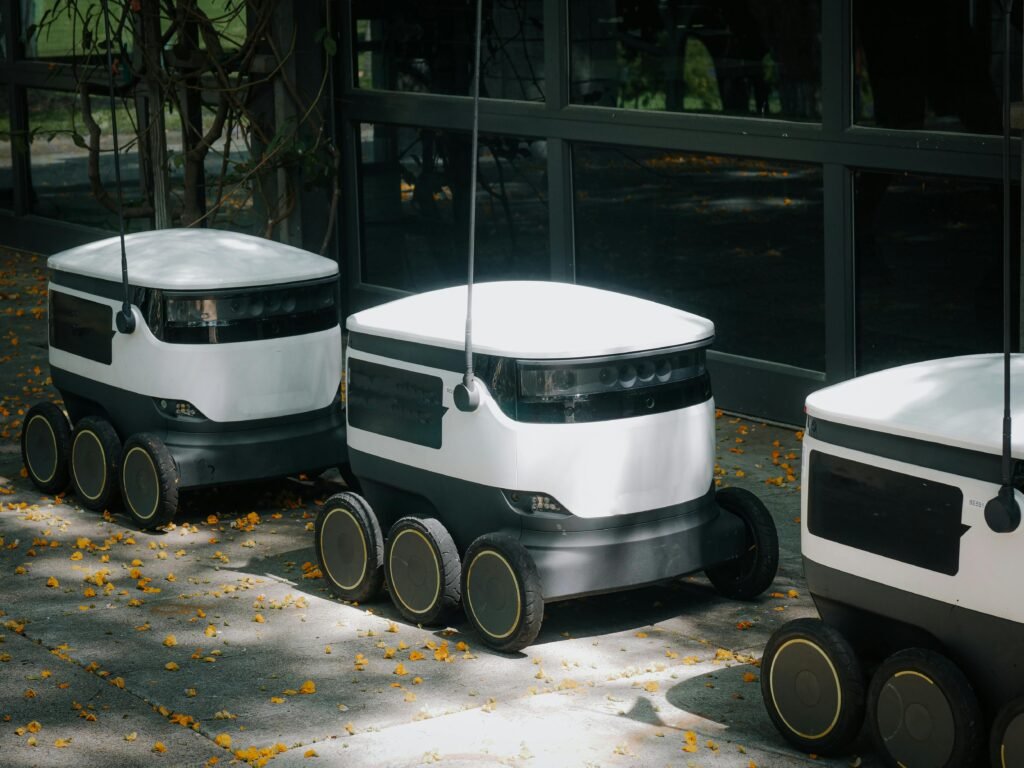
Autonomous delivery robots, surgical assistants, and warehouse automation systems are just the beginning.
Physical AI represents the bridge between digital intelligence and real-world action.
AI 4.0 – Toward Autonomous Intelligence
The most ambitious stage of AI evolution is AI 4.0, sometimes described as the era of autonomous or self-directed intelligence.
In this phase, AI systems could potentially set their own goals, learn independently, and continuously improve themselves. Researchers have begun exploring the idea of recursive self-improvement, where AI systems train and refine future versions of themselves. (The Guardian)
While still largely theoretical, this concept raises profound questions about the future of technology and humanity.
If machines become capable of independent learning and strategic planning across multiple domains, they could surpass human intelligence in many areas.
This possibility is often referred to as Artificial General Intelligence (AGI).
And its implications are both exciting and deeply complex.
Key Technologies Driving AI Evolution
Large Language Models and Generative AI
One of the most visible breakthroughs in recent years has been the rise of generative AI.
Large language models can generate text, write code, summarize documents, and even compose poetry. Image-generation systems can create realistic artwork from simple text prompts.
These technologies have dramatically expanded the creative capabilities of machines.
Generative AI is already transforming industries such as marketing, entertainment, education, and software development.
Developers now use AI tools to accelerate coding, while designers use generative systems to explore new visual concepts.
The result is a powerful collaboration between human creativity and machine intelligence.
Multimodal and Context-Aware AI
Another major advancement is multimodal AI, which can process multiple types of data simultaneously—text, images, audio, and video.
Instead of analyzing each input separately, multimodal systems combine them to gain a deeper understanding of context.
For example, an AI assistant might analyze a user’s spoken request, facial expression, and environment before responding.
This capability enables more natural interactions between humans and machines.
It also opens the door to entirely new applications, from advanced medical diagnostics to immersive virtual reality experiences.
Real-World Applications of Advanced AI
Healthcare and Scientific Discovery
Artificial intelligence is already revolutionizing medicine.
AI systems can analyze medical images with remarkable accuracy, helping doctors detect diseases earlier and more precisely. Researchers are also using AI to accelerate drug discovery by simulating molecular interactions.
One famous example is AI-driven protein structure prediction, which has dramatically sped up biological research.
These technologies could lead to breakthroughs in treatments for diseases that have long resisted traditional research methods.
Business Automation and Customer Experience
Businesses are increasingly integrating AI into their operations.
Customer service, marketing, logistics, and finance all benefit from AI-driven insights and automation.
AI systems can analyze customer behavior, predict demand, and personalize recommendations at scale.
This level of intelligence allows companies to deliver better experiences while reducing operational costs.
In many organizations, AI has become a core strategic asset rather than just a supporting tool.
The Impact of AI on the Global Economy
Productivity and Workforce Transformation
AI is often compared to previous technological revolutions like electricity or the internet.
Experts believe its impact could be even greater. Some researchers argue that AI could reshape society faster and more dramatically than the Industrial Revolution. (The Guardian)
As AI systems take over routine tasks, workers will increasingly focus on creativity, strategy, and problem-solving.
New job categories will emerge, while others may disappear.
The key challenge will be ensuring that workers have the skills needed to thrive in an AI-driven economy.
The Rise of AI-Native Businesses
Another trend is the emergence of AI-native companies.
These organizations build their products and services around AI from the ground up rather than adding AI as an afterthought.
AI-native businesses can move faster, analyze data more effectively, and scale operations rapidly.
As this model becomes more common, it may redefine how companies compete in the digital age.
Challenges and Ethical Considerations
AI Regulation and Governance
As AI becomes more powerful, governments and organizations are grappling with how to regulate it.
Legislative attention to AI has surged globally, with a 21.3% increase in AI-related laws across 75 countries since 2023. (Wikipedia)
Regulation aims to address concerns such as data privacy, algorithmic bias, and transparency.
However, policymakers face a difficult balance: protecting society while still encouraging innovation.
Risks of Superintelligence
Some experts worry about the long-term risks of superintelligent AI, systems that surpass human intelligence in nearly every domain.
Concerns include loss of control, misuse by malicious actors, and unintended consequences.
These debates have sparked calls for stricter oversight and international cooperation in AI development.
The challenge is ensuring that AI remains aligned with human values.
The Future of AI Beyond Automation
Human–AI Collaboration
Despite fears of job displacement, many experts believe the future of AI lies in collaboration rather than replacement.
AI systems excel at analyzing data and performing repetitive tasks, while humans bring creativity, empathy, and strategic thinking.
Together, they form a powerful partnership.
In many industries, the most effective teams already include both humans and AI systems working side by side.
Toward Artificial General Intelligence
The ultimate goal of AI research is Artificial General Intelligence, a system capable of performing any intellectual task that humans can do.
While AGI has not yet been achieved, rapid advances in machine learning and computational power suggest it may be possible within the coming decades.
If achieved, AGI could transform every aspect of society—from science and medicine to education and governance.
The journey toward AGI represents one of humanity’s most ambitious technological endeavors.
Real-World Examples of AI in Action
Artificial intelligence stops being an abstract concept the moment we see it operating in real systems. Real-world deployments reveal how AI moves beyond simple automation and begins making complex decisions that affect transportation, healthcare, finance, and everyday life. These examples demonstrate how AI is already embedded into critical infrastructures across industries.
AI in Tesla Self-Driving Technology
One of the most widely discussed real-world applications of artificial intelligence is self-driving technology, particularly in vehicles developed by Tesla. Tesla’s Autopilot and Full Self-Driving (FSD) systems rely heavily on AI models trained on enormous datasets collected from millions of vehicles.
Tesla vehicles use a network of cameras, sensors, and neural networks to analyze their surroundings in real time. The AI system interprets traffic signs, detects pedestrians, predicts the movements of nearby vehicles, and determines optimal driving behavior. Instead of relying on static rules, the system learns from billions of miles of driving data uploaded from Tesla cars worldwide.
This data-driven approach allows Tesla’s AI to continuously improve. Every time a Tesla vehicle encounters a new scenario—whether it’s an unusual intersection, poor weather conditions, or unexpected road obstacles—that data helps refine the system’s neural networks.
What makes this system remarkable is its ability to predict human behavior on the road. The AI must estimate whether a pedestrian might cross the street or whether another driver might suddenly change lanes. These predictions involve probabilistic reasoning rather than fixed instructions.
Self-driving AI illustrates the shift from automation to intelligence. Instead of simply executing commands, the system constantly analyzes context and adapts its decisions in real time. The long-term goal is a fully autonomous transportation network where vehicles can safely navigate cities without human intervention.
AI in Healthcare Diagnostics
Healthcare is another domain where AI is moving far beyond simple automation. Modern medical AI systems are capable of identifying diseases earlier and more accurately than many traditional diagnostic methods.
Hospitals increasingly use AI algorithms to analyze medical images such as X-rays, MRIs, and CT scans. These systems detect subtle patterns that might be difficult for the human eye to notice, helping doctors diagnose conditions like cancer, pneumonia, or cardiovascular disease.
One groundbreaking example is the protein-folding research system developed by DeepMind, known as AlphaFold. AlphaFold solved a decades-long biological challenge by predicting the three-dimensional structure of proteins with remarkable accuracy. Understanding protein structures is essential for developing new drugs and treatments.
AI is also transforming clinical decision support systems. Doctors can input patient data—including symptoms, medical history, lab results, and genetic information—into AI models that recommend potential diagnoses and treatment plans.
Another major benefit is speed. Traditional drug discovery can take over a decade and cost billions of dollars. AI models can analyze molecular interactions and simulate potential drug candidates in a fraction of that time.
These innovations demonstrate how AI doesn’t replace doctors—it enhances their capabilities. Medical professionals remain responsible for final decisions, but AI tools provide insights that dramatically improve accuracy and efficiency.
AI in Finance Fraud Detection
Financial institutions face a constant battle against fraud, cybercrime, and identity theft. Traditional rule-based fraud detection systems often struggled to keep up with evolving criminal tactics. Artificial intelligence has changed that landscape dramatically.
Banks now deploy AI systems that analyze transaction patterns across millions of accounts simultaneously. These models detect unusual behaviors such as sudden large transfers, suspicious geographic activity, or abnormal spending patterns.
For example, companies like Mastercard and Visa use machine learning models that evaluate transactions in milliseconds. Each payment is scored based on its likelihood of being fraudulent, allowing the system to block suspicious activity before the transaction is completed.
What makes AI particularly powerful in fraud detection is its ability to learn from evolving threats. Criminal techniques change constantly, but machine learning systems adapt as new patterns emerge. Every detected fraud attempt helps the model improve future predictions.
AI systems also analyze network relationships between accounts. Fraudsters often operate in coordinated groups, creating webs of interconnected transactions. AI can identify these hidden networks by analyzing data relationships that would be nearly impossible for humans to detect manually.
The result is a financial system that is far more resilient against fraud. AI doesn’t just automate monitoring—it actively learns and adapts to protect global financial networks.
Visualizing the Evolution of Artificial Intelligence
Visual content improves comprehension and engagement. When complex technological evolution is presented through charts, timelines, and diagrams, readers can quickly grasp how different elements connect.
Below are visual representations that help illustrate how AI has developed over time and how it operates within modern systems.
AI Evolution Timeline
| Era | Major Breakthrough | Impact |
| 1950s | Early AI research and symbolic reasoning | Concept of machines simulating intelligence |
| 1980s | Expert systems | Rule-based automation in industries |
| 2000s | Machine learning expansion | Data-driven prediction models |
| 2010s | Deep learning revolution | Image recognition, speech recognition |
| 2020s | Generative AI and large language models | Human-like content creation and AI assistants |
| Future | Artificial General Intelligence | Autonomous reasoning across domains |
This timeline highlights how AI progressed from theoretical concepts to practical systems embedded in everyday technology.
AI Workflow Diagram (Simplified)
Below is a simplified AI decision-making workflow that demonstrates how modern machine learning systems operate.
Data Collection ↓Data Cleaning & Preparation ↓Model Training ↓Model Evaluation ↓Deployment ↓Continuous Learning from New Data
This cycle illustrates an important concept: AI systems continuously improve through feedback loops. Every new dataset allows the model to refine its predictions and adapt to changing environments.
AI Adoption Growth Chart
| Year | Global AI Adoption Rate |
| 2018 | 20% |
| 2020 | 33% |
| 2023 | 55% |
| 2025 | 72% |
This trend demonstrates how rapidly artificial intelligence is spreading across industries. Businesses that once viewed AI as experimental now consider it essential for competitiveness.
Why Visual Content Improves SEO Performance
Search engines increasingly prioritize rich content experiences. Articles that combine text with visual elements tend to perform better in search rankings because they provide multiple ways for readers to engage with the information.
Visual content offers several SEO advantages:
- Improved readability for complex topics
- Longer time on page, which signals quality to search engines
- Higher shareability on social media platforms
- Better comprehension for technical subjects like AI
When readers encounter charts, diagrams, or structured timelines, they can quickly understand relationships between ideas without reading every paragraph.
For technical topics like artificial intelligence, visuals act like a roadmap. They help readers navigate complicated concepts while reinforcing the key arguments of the article.
As AI continues evolving, visual explanations will become even more important for communicating how these technologies work and why they matter.
Conclusion
Artificial intelligence has traveled an extraordinary path—from simple rule-based automation to intelligent systems capable of learning, reasoning, and creating. What once seemed like a specialized technology has become a central force shaping modern society.
The evolution of AI beyond automation marks the beginning of a new era. Machines are no longer just tools that execute commands; they are becoming collaborators that augment human capabilities.
From healthcare breakthroughs to smarter businesses and more personalized digital experiences, AI is redefining what technology can achieve.
The future of AI will depend not only on technological innovation but also on thoughtful governance, ethical development, and human adaptability.
One thing is certain: the evolution of artificial intelligence has only just begun.
FAQs
1. What does “AI beyond automation” mean?
It refers to the shift from simple rule-based automation to intelligent systems capable of learning, reasoning, and making decisions independently.
2. What technologies are driving AI evolution?
Key technologies include machine learning, deep learning, large language models, generative AI, robotics, and multimodal AI systems.
3. What is agentic AI?
Agentic AI refers to autonomous systems capable of planning, making decisions, and executing tasks with minimal human supervision.
4. Will AI replace human jobs?
AI will automate some tasks but also create new opportunities. Most experts believe the future will involve human–AI collaboration rather than full replacement.
5. What is Artificial General Intelligence (AGI)?
AGI is a theoretical AI system capable of performing any intellectual task a human can do, potentially surpassing human intelligence in many domains.