

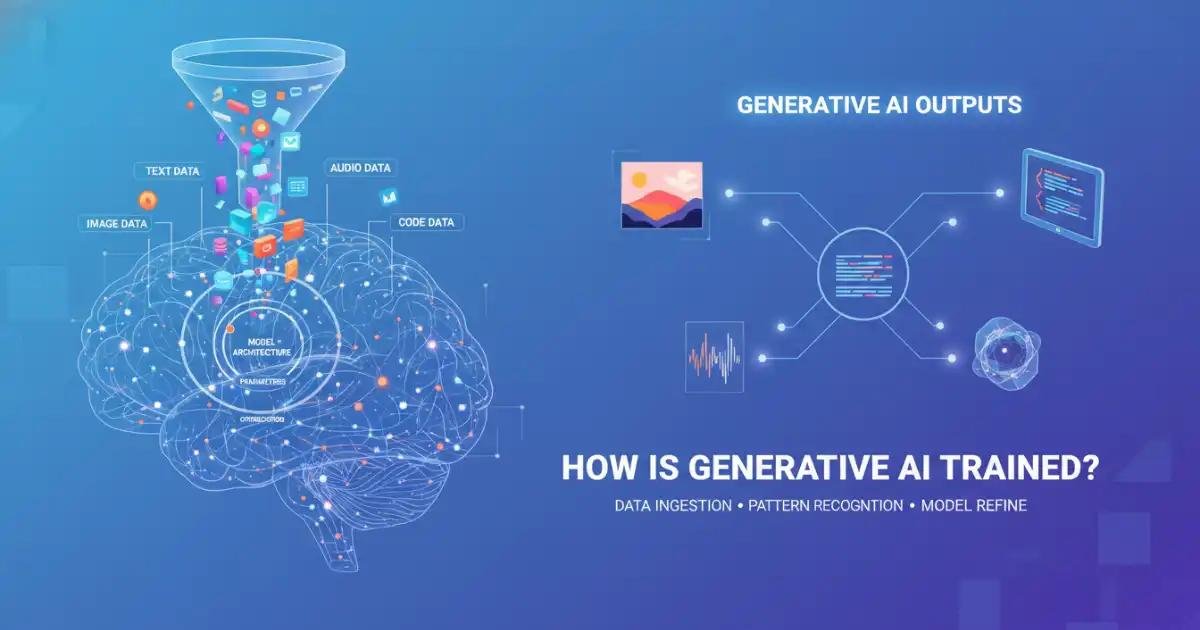
What Challenges Does Generative AI Face With Respect to Data? Generative AI has changed how people create text, images, software, audio, video, and other forms of digital content. Behind all of these capabilities, however, is something less visible but extremely important: data.
Generative AI systems learn patterns from enormous datasets. The information used to train these models helps them understand language, recognize visual patterns, write code, answer questions, and generate new content. But having a huge amount of data does not automatically produce a reliable AI system.
The data must also be relevant, diverse, accurate, legally usable, and properly prepared.
This creates a growing challenge for the AI industry. As models become larger and more capable, developers need increasingly sophisticated approaches to finding, filtering, protecting, and evaluating training data.
So, what challenges does generative AI face with respect to data?
The answer involves much more than simply finding enough information. Generative AI faces challenges involving data quality, bias, privacy, copyright, outdated information, synthetic content, data scarcity, security, and the cost of preparing large datasets.
Understanding these challenges helps explain both the impressive capabilities and the limitations of modern generative AI.
1. The Quality of Training Data
One of the most fundamental challenges is data quality.
Generative AI models learn from the examples provided to them. If those examples contain inaccurate information, poor writing, duplicated material, spam, or misleading claims, the model can potentially learn those patterns.
This is particularly important because the internet contains an enormous mixture of high-quality and low-quality information.
A search engine may find:
- Academic research
- Government information
- Professional journalism
- Expert-written guides
- Product documentation
- Personal blogs
- Online forums
- Advertising
- Spam
- Automatically generated content
- Outdated webpages
- Incorrect information
A dataset containing billions of documents is therefore not necessarily a high-quality dataset.
Developers need systems that can identify useful information and remove or reduce problematic material before it is used for training.
This makes data curation one of the most important parts of building a reliable generative AI system.
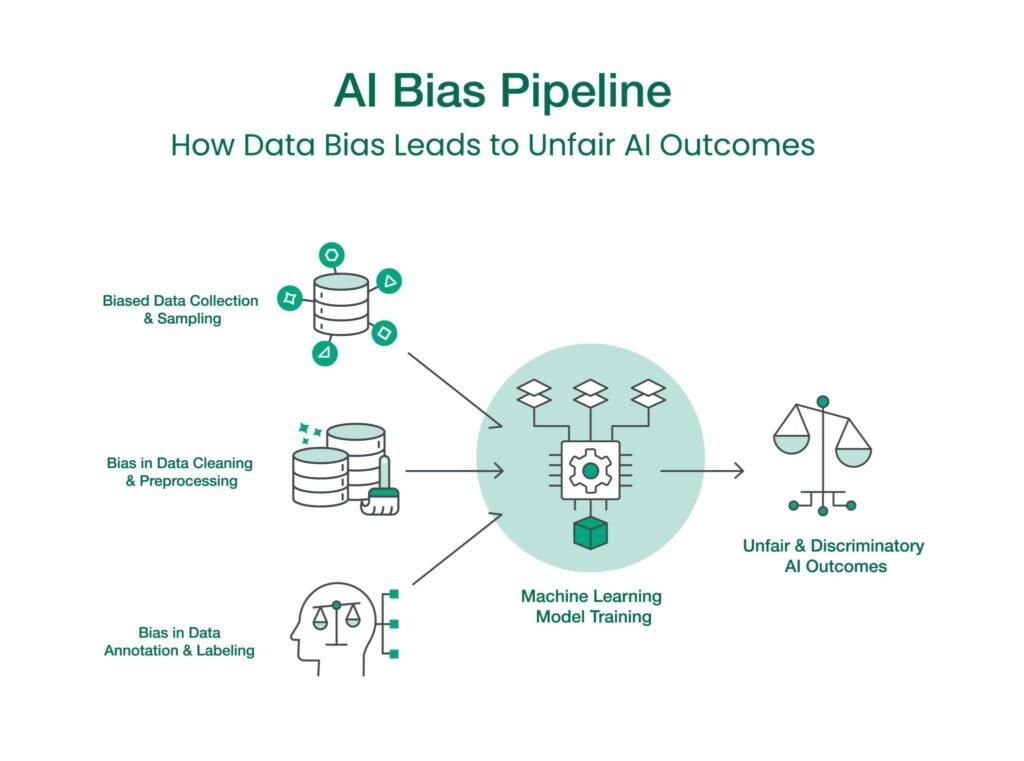
2. Biased Data Can Produce Biased AI
Another major challenge is bias.
Data reflects the people, organizations, cultures, and societies that produce it. If particular groups are overrepresented while others are poorly represented, an AI model may learn an incomplete view of the world.
Bias can appear in many forms, including:
- Gender bias
- Cultural bias
- Geographic bias
- Language bias
- Historical bias
- Social stereotypes
- Economic bias
For example, imagine an AI system trained primarily on English-language content from a limited number of countries. It may have a much stronger understanding of those countries’ perspectives than the perspectives of communities that produce less digital content.
The problem is not always intentional. Bias can emerge simply because some types of information are more readily available online than others.
Developers therefore need to evaluate datasets carefully and test models across different groups, languages, and situations.
3. Finding Enough High-Quality Data
Generative AI models require enormous amounts of training data.
At first glance, this might seem like an easy problem because the internet contains an enormous quantity of information.
The difficulty is that quantity and quality are not the same thing.
A large percentage of online material may be duplicated, repetitive, inaccurate, automatically generated, or unsuitable for training.
High-quality datasets are much harder to obtain.
This becomes particularly important as AI companies develop increasingly capable models. Developers may need more specialized and carefully selected data rather than simply collecting larger amounts of general web content.
For some fields, such as medicine, law, engineering, and scientific research, the availability of reliable specialized data can be especially limited.
4. Copyright and Data Ownership
Copyright is another complicated issue.
Generative AI systems may learn from books, articles, photographs, illustrations, software code, music, and other forms of creative work. Many of these materials are protected by intellectual-property laws.
This creates important questions:
- Who owns the training data?
- Does an AI developer have permission to use it?
- How should creators be compensated?
- Can copyrighted works be used to train commercial AI models?
- What happens when AI-generated output resembles existing creative work?
There is no single simple answer that applies to every country and every type of data.
AI companies must therefore pay close attention to licensing, copyright law, contracts, and data provenance.
For creators, the issue is equally important. Writers, artists, photographers, musicians, and software developers increasingly want to know how their work is being used in AI training.
The debate surrounding AI and copyright is likely to remain important as generative AI continues to develop.
5. Privacy and Personal Information
Large datasets can sometimes contain personal information.
Names, email addresses, photographs, medical information, financial information, private conversations, and other sensitive details may appear in datasets if data collection and filtering are not handled properly.
This creates privacy risks.
AI developers need processes for identifying and removing inappropriate personal information when necessary. They also need to consider how data is collected, stored, processed, and protected.
Privacy becomes even more important when AI systems are used in areas such as:
- Healthcare
- Banking
- Education
- Human resources
- Customer service
- Government services
An AI system should not be treated as if access to a large amount of data automatically means that the data can be used without restrictions.
Responsible data governance is essential.
6. Outdated Information
Another problem is that information changes.
A model trained on older information may know facts that were correct when the training data was collected but are no longer current.
Consider information about:
- Laws and regulations
- Product prices
- Company leadership
- Technology
- Software versions
- Sports results
- Current events
- Government policies
These subjects can change quickly.
This is one reason why a generative AI model should not automatically be considered an up-to-date source of information simply because it can produce fluent answers.
Keeping AI systems connected to reliable and current information sources can help address this problem, but it introduces additional challenges involving data retrieval, verification, security, and source quality.
7. The Growth of AI-Generated Data
One of the newer challenges is the increasing amount of AI-generated content on the internet.
As generative AI becomes widely available, people are producing articles, images, videos, comments, product descriptions, social media posts, and other materials using AI.
This creates an unusual situation.
Future AI systems may encounter large quantities of content that were themselves generated by previous AI systems.
If synthetic content is repeatedly collected and reused as training data without proper controls, models could potentially learn repetitive patterns, errors, or artificial characteristics from previous generations of AI output.
This does not mean that all synthetic data is useless.
AI-generated data can be valuable when it is carefully created, tested, and combined with high-quality human-generated information.
The challenge is knowing the difference.

8. Data Diversity
Generative AI should ideally work for people with different languages, cultures, backgrounds, and communication styles.
Achieving that goal requires diverse data.
English has an enormous amount of digital content compared with many other languages. Some languages have relatively limited online resources, particularly high-quality resources that can be easily used for machine learning.
This can create differences in AI performance.
An AI model might produce excellent results in English while struggling with a language that has fewer high-quality training examples.
The same problem can occur with cultural knowledge.
A model needs exposure to diverse perspectives if it is expected to understand users from different parts of the world.
Improving data diversity can therefore make AI systems more useful and inclusive.
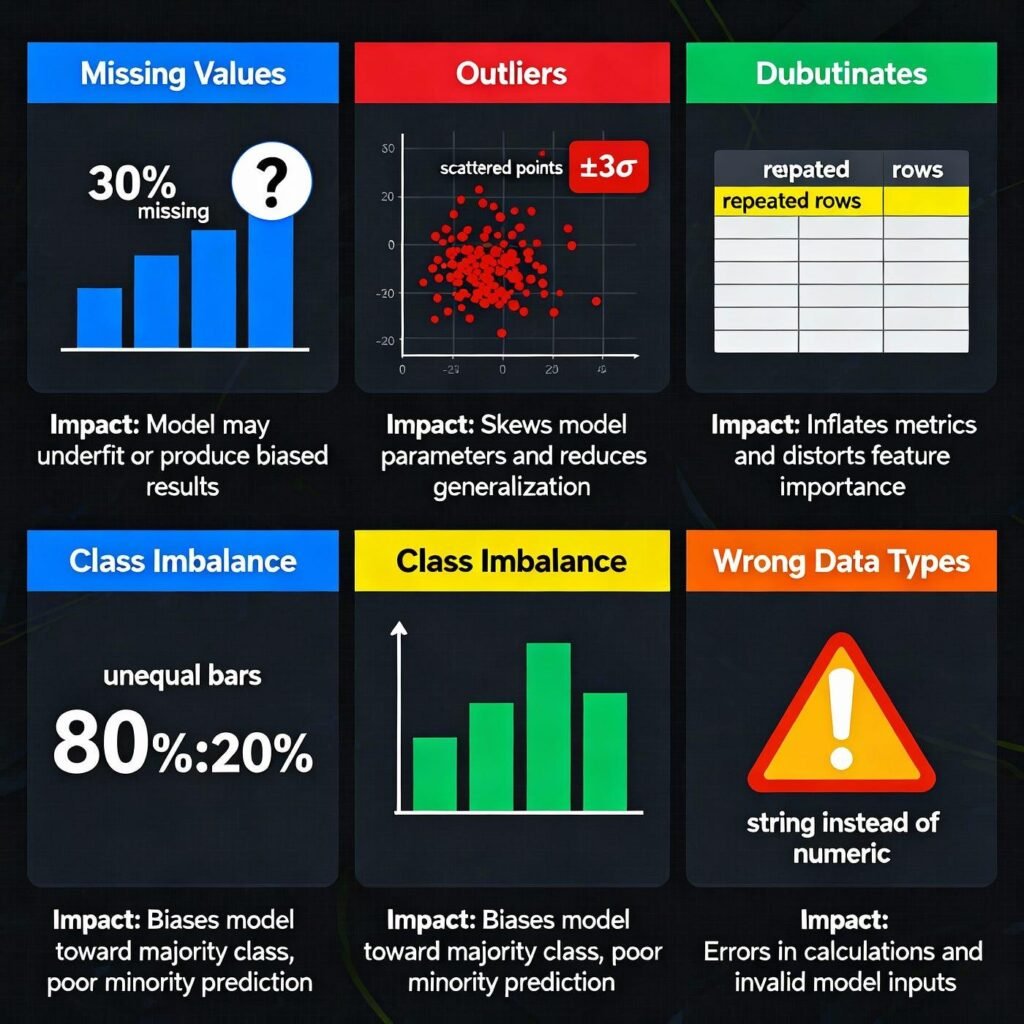
9. Cleaning and Preparing Data Is Expensive
Raw data cannot simply be collected and immediately used to train a large AI model.
Data often needs to be:
- Collected
- Filtered
- Cleaned
- Deduplicated
- Categorized
- Checked for quality
- Evaluated for safety
- Processed into a suitable format
This requires significant computing resources and human expertise.
For example, a dataset may contain millions of duplicate webpages. Removing duplicates can make the dataset more efficient.
Similarly, a dataset may contain spam or harmful material that needs to be identified and filtered.
The larger the dataset becomes, the more complicated these processes can become.
10. Data Labeling Can Be Difficult
Some AI applications require labeled data.
Labeling means adding information that tells a machine-learning system what particular data represents.
For example, an image dataset might identify whether an image contains a cat, dog, vehicle, building, or person.
Human workers may be involved in creating or checking these labels.
The problem is that large datasets can require enormous amounts of labeling work.
Labeling can also be subjective.
Two people may disagree about whether a particular sentence is offensive, whether an image belongs to a particular category, or whether a piece of information is accurate.
This means that data-labeling processes need clear guidelines and quality-control systems.
11. Data Security
Training datasets can be valuable.
Companies may invest significant amounts of money collecting and preparing proprietary information. If attackers gain unauthorized access to those datasets, the consequences can be serious.
Security threats can include:
- Data theft
- Unauthorized access
- Data manipulation
- Accidental exposure
- Malicious data insertion
- Compromised data sources
AI developers therefore need strong security practices throughout the data lifecycle.
Protecting data is not only about securing the final AI model. It also involves protecting the systems used to collect, store, process, and transfer the underlying information.
12. Data Provenance
Another increasingly important concept is data provenance.
Data provenance refers to understanding where information came from and how it was collected or modified.
Imagine that an AI developer has a dataset containing millions of documents.
Can the developer determine:
- Where each document originated?
- Whether it is copyrighted?
- When it was published?
- Whether it has been modified?
- Whether it contains personal information?
- Whether it came from a trustworthy source?
The answers can be difficult to determine at scale.
Better provenance systems can help organizations understand what is inside their datasets and make more informed decisions about whether particular information should be used.
13. The Risk of Incorrect Information
Generative AI can produce information that sounds convincing even when it is incorrect.
This phenomenon is commonly described as an AI “hallucination.”
Data quality is one factor behind this problem.
A model does not simply retrieve a perfect database of facts. It learns statistical patterns from its training data and generates responses based on those patterns.
If information is contradictory, incomplete, or incorrect, the model may produce an answer that sounds reasonable but is not reliable.
This is especially dangerous in high-stakes areas.
For example, users should be cautious about relying on AI-generated information for medical, legal, financial, or safety-critical decisions without appropriate verification.
14. Specialized Data Can Be Difficult to Obtain
General internet data may help an AI model understand everyday language, but specialized applications often require specialized datasets.
Consider an AI system designed for:
- Medical research
- Scientific analysis
- Engineering
- Legal research
- Financial analysis
- Industrial operations
In these fields, generic web content may not be sufficient.
Specialized data may be limited because it is expensive to create, protected by privacy requirements, commercially sensitive, or stored in systems that are not publicly accessible.
Organizations therefore need alternative approaches, such as licensed datasets, expert-generated data, synthetic data, or carefully controlled private datasets.
15. Data Can Become a Competitive Advantage
High-quality data is becoming strategically important.
Two companies can use similar AI architectures but achieve different results because they have access to different datasets.
A company with better domain-specific data may be able to create a model that performs particularly well for a specialized task.
This means that data is increasingly viewed not merely as raw material but as an important business asset.
However, organizations need to balance the value of proprietary data with privacy, security, legal, and ethical responsibilities.
How Can Generative AI Handle These Data Challenges?
There is no single solution.
Instead, organizations are using multiple approaches.
Better data filtering
Automated systems can identify spam, duplicates, low-quality pages, and potentially harmful material.
Human review
Human experts can evaluate difficult cases that automated systems cannot reliably classify.
Data governance
Organizations can establish policies defining how information is collected, stored, used, and deleted.
Diverse datasets
Developers can intentionally seek data representing different languages, cultures, regions, and perspectives.
Licensed data
Companies can obtain data through licensing agreements where appropriate.
Retrieval systems
Instead of relying entirely on information learned during training, AI systems can retrieve information from external sources when answering certain questions.
Continuous evaluation
Models can be tested regularly to identify factual errors, bias, outdated information, and other problems.
These approaches do not eliminate every risk, but they can make AI systems more reliable.
Why Data Quality May Matter More Than Data Quantity
The AI industry has historically focused heavily on scale.
More parameters, more computing power, and more training data can produce more capable systems.
But there is an important distinction between more data and better data.
A smaller collection of accurate, diverse, relevant, and carefully curated information may be more useful for a particular task than a much larger collection filled with duplicates and unreliable material.
This is especially true for specialized AI applications.
For example, an AI system designed to help engineers may benefit more from a carefully selected collection of high-quality technical documentation than from millions of unrelated webpages.
The future of AI data management is therefore likely to involve increasingly sophisticated methods for identifying which information is genuinely valuable.
The Future of Data and Generative AI
As generative AI continues to develop, the relationship between AI and data will become even more important.
The industry is likely to face several competing pressures.
AI systems will need more useful information while the supply of easily accessible, high-quality human-generated data may become more difficult to expand.
At the same time, the amount of synthetic content will continue to increase.
Organizations will also face greater expectations around privacy, copyright, transparency, and responsible data use.
This could lead to greater investment in carefully curated datasets, licensed information, domain-specific data, human feedback, and systems capable of identifying trustworthy sources.
The companies that manage these challenges effectively may have a significant advantage.
Final Thoughts
Generative AI is often described as a technology problem, but much of its success depends on something more fundamental: data.
AI models need large quantities of information, but size alone is not enough. The data needs to be accurate, diverse, relevant, secure, and responsibly obtained.
The biggest challenges include poor-quality information, bias, privacy concerns, copyright disputes, outdated knowledge, limited specialized datasets, AI-generated content, security risks, and the cost of preparing data.
There is also an important lesson for AI users: a fluent answer is not automatically a correct answer.
Generative AI can produce remarkably useful results, but the quality of those results depends heavily on the information and processes behind the system.
As AI becomes more deeply integrated into business, education, research, and everyday life, improving the way data is collected and managed will be just as important as improving the AI models themselves.
In the long run, the question may not simply be, “How much data does an AI system have?”
A better question is:
“How trustworthy, diverse, relevant, and well-managed is the data behind it?”
That distinction could play a major role in determining how reliable generative AI becomes.