


Emotion Wins the Attention Race…
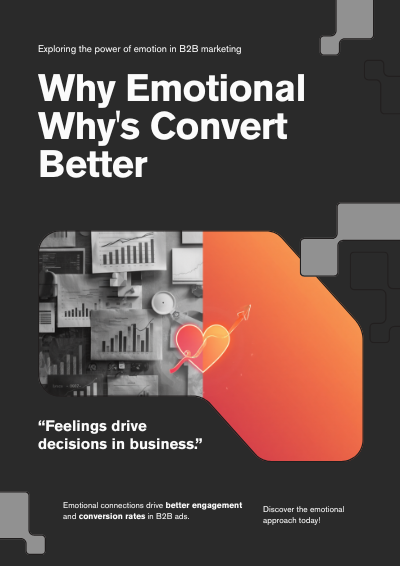
Why Emotional Why’s Convert Better Than Logic in B2B Ads Pros do not pull out spreadsheets first thing in the morning. Instead, they wake up with a feeling that something is wrong, urgent, risky, uncertain, overdue, or promising. That gut reaction kicks scrutiny into high gear, and ads either align with that feeling or get deleted. Logic tends to arrive later as support.
Studies of consumer and business purchases have consistently demonstrated messages with an emotional hook get higher recall and engagement rates. That’s important for B2B ads too because any message that can be remembered has a greater chance of surviving the barrage of buyside messaging and landing in conversation.
Here’s What the Data Says…
Ads with obvious emotional context perform better on average than purely-feature focused comparisons, when measured by click through rate and conversion rate. That doesn’t make data and features useless. It just means they’re more effective once you’ve captured attention with relevance or tension.
The most common triggers tie a business issue to personal outcomes. Slow approvals don’t just hurt productivity, they create revenue the company is leaving on the table. Security gaps mean anxious nights for your IT team. Fragmented systems force employees to waste time reconciling data.
- Emotional headlines create recognition that this is about me. That recognition earns more clicks.
- Problem based or solution based messaging speaks directly to pressure a buyer is feeling.
- Trust signals like logos, reviews, and differentiation decrease fear.
- Stories are easier to recall than abstract concepts.
- Outcome based ads allow buyers to imagine success which creates motivation.
Emotion wins because buyers aren’t dissecting ads like lab experiments. They skim, filter out irrelevance, and react first to whatever triggers personal usefulness or urgency.
But B2b Purchasing Is a Team Decision
Complicated purchases tend to involve more stakeholders, longer timelines, and higher risk. Emotion matters even more for big decisions because everyone wants a little confidence going into a purchase of this size. Will this work? What if we fail? Who do I tell? Nobody enjoys making costly mistakes.
Each person reviewing the shortlist has their own concerns, but they all share one thing in common: psychological triggers that move them toward yes or no. If your ad can communicate confidence, clarity, and relief upfront, you reduce cognitive resistance before comparative analysis begins.
Examples of Effective Emotional Triggers
You can’t just throw fear in everyone’s faces and hope it sticks. Not every emotion is appropriate for every offer or audience. Certain triggers align with B2B purchasing better than others. They’re still emotions, but emotions that professional buyers respond to every day.
- Fear of loss.
- Relief.
- Confidence.
- Ambition.
- Frustration.
It’s possible to tap into these emotions without making your offer sound desperate or scary. In fact, focusing on specific emotions humanizes the message by narrowing down what the buyer is trying to improve.
Logic Matters, but Only After Attention
Fact based lists satisfy our need for research, but they struggle to gain initial interest. Most audiences compare multiple solutions that essentially tell the same story of automated workflows, seamless integration, and scalability. In isolation, those features are hardly motivating.
Emotion gives logic context. A relatable problem or anxious doubt creates a reason to care now versus later. Whatever pain point you tackle should tie back to your solution’s ability to fix it. You’re creating a feeling first, then showing them how to feel that way about your product.
Putting It Together: Emotional and Logical Messaging
Successful B2B marketing does both. You just need to trigger emotion before presenting logic. Lead with something that makes buyers feel concerned or excited about their situation. Follow it up with data points they care about to validate your message.
- Start with a problem that prospects feel BEFORE they research solutions.
- Speak directly to your audience, don’t sound like every other advertiser.
- Make audacious claims, but only if you can prove them.
- Use images that reflect the tone of your ad copy.
- Your ad should promise the same experience someone gets when they land on your page.
- Test emotions with A/B testing. Will we lose business? VS How much business are we leaving on the table?
Combine those tips with the rest of this guide and you should see an improvement in CTR and quality leads. Remember why this works. Attention precedes decision making. Your ad is the first thing they see and decide about. Make it count.
Prove Me Wrong: Recommended Metrics
Sold on emotions but not sure how to measure success? Forget about raw traffic volumes. Emotional messaging aims to improve quality, not just quantity. Pay attention to your ad’s click through rate first. That tells you whether your ad earned attention. Then look at conversion rates.
Are more people completing demos? Are your sales team getting more Accepted Leads? Are new opportunities coming from this ad campaign? Are you selling faster? Better hooks may improve your numbers across the board.




[…] Winning starts with acting like AI is not a one-off project, but an organization-wide change effort with technology components. Aligning use cases with business strategy, conditioning your data environment, appointing owners, and measuring results post-launch are the difference between executing AI and just talking about it. […]