

A Simple Weekly Keyword Research Workflow You do not need to spend hours every day researching keywords. A simple weekly routine can help you discover topics, make publishing decisions, and improve existing content.
Here is a practical process for a business owner working with a limited budget.
Monday: Find New Ideas
Spend 20–30 minutes exploring topics using Google Autocomplete, Ahrefs Free Keyword Generator, or Google Keyword Planner.
Write down phrases related to your services and the questions your customers frequently ask.
Avoid collecting hundreds of unrelated ideas. Focus on the topics your business can answer well.
Tuesday: Validate Your Best Keywords
Review your shortlist using the available search-volume data and Google Trends.
Check the search results for your most promising phrases. Look for the type of content ranking, the apparent search intent, and whether you can provide something genuinely useful.
Remove keywords that are irrelevant, too broad, or unsuitable for your website.
Wednesday: Plan Your Content
Choose one primary topic and identify a few closely related subtopics.
Create an outline that answers the main question and covers the important details readers need.
For example, an article about choosing a free keyword research tool might include a comparison table, step-by-step instructions, limitations, and a practical example.
Thursday: Publish or Improve a Page
Write a new article or improve an existing page.
Make sure the content explains the subject clearly, uses accurate information, includes helpful examples, and provides relevant links to authoritative resources.
Where useful, add original screenshots, diagrams, or illustrations that help readers understand the process.
Friday: Review Performance
If your website is connected to Google Search Console, review its Performance report.
Look at clicks, impressions, CTR, and average position. Identify relevant queries that may suggest an opportunity to improve the page.
Do not expect immediate results from every article. Search performance can change over time, and new pages may need a longer observation period before you can draw meaningful conclusions.
The purpose of this routine is consistency. A small business that researches carefully, publishes useful content, and reviews its results can gradually develop a stronger SEO strategy without purchasing a large collection of tools.
How to Measure Whether Your Keyword Research Is Working
Keyword research should support business outcomes rather than simply increase the number of phrases in a spreadsheet.
Start by deciding what success means for your website.
Track Organic Clicks
Organic clicks show how many times users clicked your pages in unpaid Google Search results.
If your content is attracting relevant visitors, organic clicks may increase over time. However, fluctuations are normal, and growth depends on many factors beyond keyword research.
Monitor Impressions
Impressions indicate how often your pages appear in Google Search results under Google’s reporting rules.
Increasing impressions may suggest that Google is displaying your content for more relevant queries.
But impressions alone do not establish that the page is attracting the right audience or generating business results.
Examine Click-Through Rate
Click-through rate, or CTR, measures clicks relative to impressions.
If a page receives many impressions but few clicks, examine its search queries, average positions, title, and description.
A low CTR can have several explanations. It does not automatically mean that you need to rewrite the title.
Measure Leads and Sales
For a business website, the most meaningful outcomes may include:
- Contact form submissions.
- Quote requests.
- Email newsletter registrations.
- Product purchases.
- Appointment bookings.
- Qualified inquiries.
Use suitable analytics and conversion tracking to understand whether organic search traffic contributes to these outcomes.
A keyword that brings fewer visitors but generates qualified leads may be more valuable than one that attracts large numbers of unrelated readers.
Review Performance Over Time
Avoid making major decisions based on a single day’s data.
Compare suitable time periods and account for seasonality, changes to your website, and other marketing activities.
For example, a seasonal business may naturally experience more searches during certain months.
Review your results regularly, improve content where the evidence supports it, and keep your expectations realistic.
Frequently Asked Questions
1. What Is the Best Free Keyword Research Tool for Small Businesses?
The best choice depends on your needs.
Google Keyword Planner is useful for keyword ideas and advertising estimates. Google Search Console is valuable for understanding the search queries already associated with your website. Google Trends helps investigate seasonality, while Ahrefs Free Keyword Generator is useful for discovering related phrases.
For many small businesses, combining two or three tools provides a practical starting point.
2. Can I Do Keyword Research Without Paying for SEO Software?
Yes. You can start with free resources such as Google Trends, Google Search Console, Google Autocomplete, Bing Webmaster Tools, and free keyword generators.
Some tools require account setup or restrict particular features. You may also need to use multiple resources because no single free tool provides every metric.
3. Are Free Keyword Research Tools Accurate?
They can provide useful information, but their metrics should be interpreted carefully.
Search-volume figures are generally estimates, and different providers may report different numbers. Google Trends measures relative interest rather than exact search counts, while Search Console reports performance for your own website.
Use the metrics as decision-making aids, not absolute facts.
4. How Can I Find Low-Competition Keywords for My Blog?
Start with a specific audience and a topic you understand.
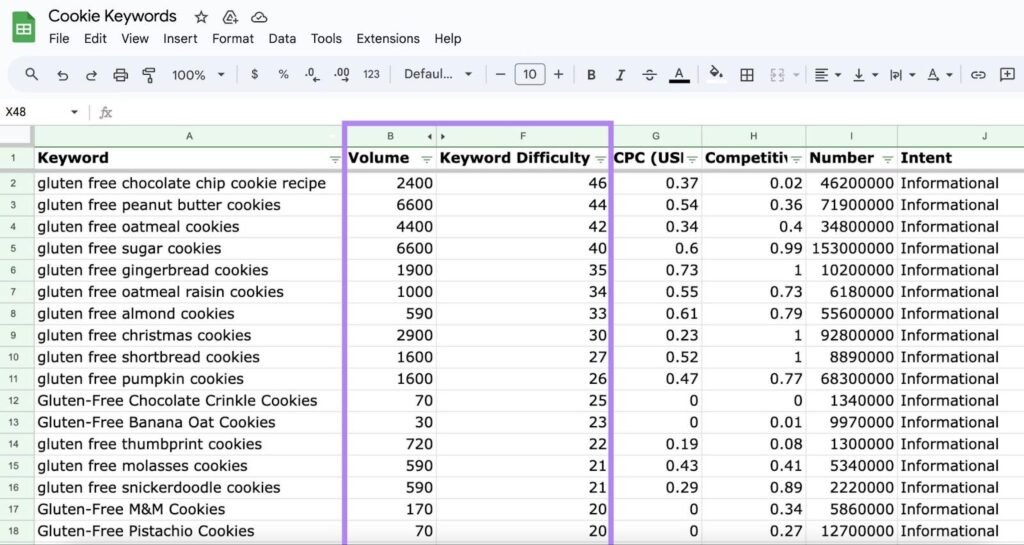
Generate keyword variations, investigate search demand, examine available difficulty scores, and inspect the pages currently ranking.
Look for relevant questions that you can answer more clearly or comprehensively than the existing results.
Remember that a long phrase or low difficulty score does not guarantee easy rankings.
5. How Many Keywords Should I Target in One Article?
Start with one primary topic and incorporate related phrases where they fit naturally.
An article can address several closely related keywords if they share the same search intent.
Avoid forcing unrelated keywords into one page. If two phrases require substantially different content to satisfy the searcher, separate pages may be more appropriate.
6. Should I Choose Keywords With High CPC?
Not necessarily.
CPC, or cost per click, usually refers to an advertiser’s estimated cost for a paid click. It is not the amount a website automatically earns when someone visits through organic search.
High CPC can suggest that advertisers value certain search traffic, but it does not guarantee that the keyword will produce profitable leads or high advertising revenue for your website.
Consider relevance, competition, conversion potential, and your business model together.
7. How Often Should I Conduct Keyword Research?
A useful approach is to perform initial research before creating content, review performance periodically, and revisit your keyword priorities when your products, audience, or market changes.
For a small blog, a short weekly research session combined with a monthly performance review may be sufficient.
A larger business with many products or frequent seasonal campaigns may need a more detailed process.
8. Do I Need a Paid Tool to Rank on Google?
No. You can create a useful keyword strategy without paying for premium SEO software.
Paid tools can save time and provide additional data, but they do not guarantee rankings.
Understanding your audience, creating helpful content, making your website accessible to search engines, and improving your pages based on evidence are more important than simply purchasing a subscription.
9. Are Keyword Research Tools Useful for Local Businesses?
Yes. Local businesses can use keyword research to understand how customers describe their services and locations.
For example, a cleaning company might investigate phrases related to move-out cleaning, deep cleaning, and apartment cleaning in the areas it serves.
Combine keyword research with an accurate business profile, useful local pages, genuine customer reviews, and clear contact information.
10. Can AI Replace Keyword Research Tools?
AI can help generate ideas, classify keywords, and organize content plans. However, its suggestions should be validated with real search data and the current search results.
Use AI to accelerate brainstorming, not to invent search volumes or claim that a keyword is easy to rank for without evidence.
Final Thoughts: Start Small and Focus on Useful Keywords
Free keyword research tools for small businesses make it possible to build a practical SEO strategy without immediately investing in expensive software.
The important step is choosing tools that solve your actual problems.
Start with Google Keyword Planner to explore keyword ideas and estimated demand. Use Google Trends to understand relative interest and seasonality. Try Ahrefs Free Keyword Generator to discover related phrases. If your website already receives search traffic, use Google Search Console to identify opportunities within your existing content.
Then examine the search results, understand what people are trying to accomplish, and create pages that answer their questions.
You do not need to publish dozens of articles every week or chase every trending keyword. A focused collection of relevant, well-researched pages can be more useful than a large collection of repetitive content.