

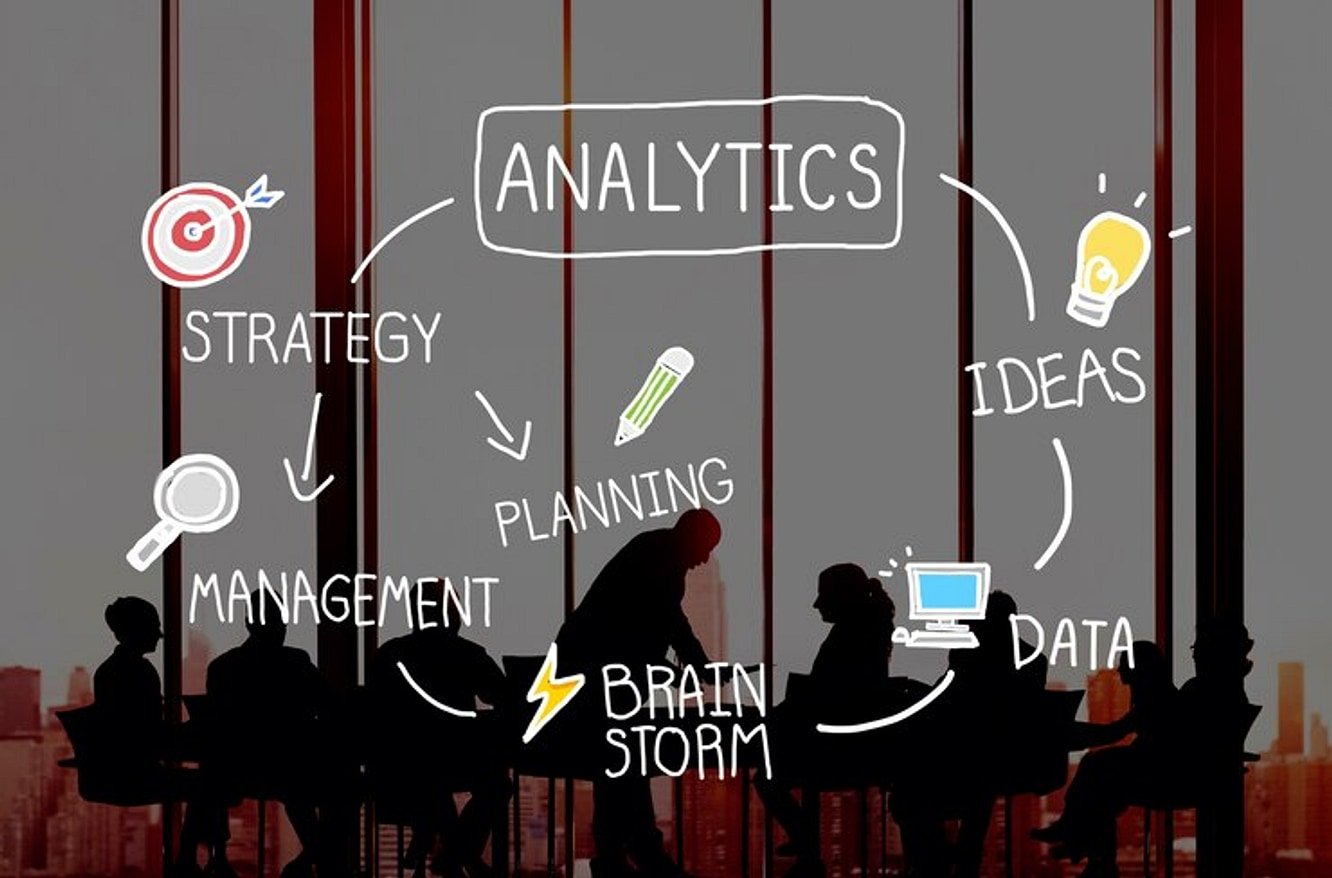
Why Data-Driven Storytelling Will Define Brand Marketing in 2026 Every brand has their own story to tell. Why Data-Driven Storytelling Will Define Brand Marketing in 2026
Every brand has a story to tell. In 2026, however, having a story is no longer enough. Organizations have access to more customer data and signals, engagement metrics, behavioral information, and predictive intelligence than ever before.
The challenge is turning all of that information into something people can understand, remember, and act on.
A dashboard can tell marketers that conversions increased. A customer journey report can show where people dropped off. Predictive models can identify which customers are most likely to purchase. But none of those insights automatically explains why something happened or why the audience should care.
That is where storytelling becomes valuable.
In 2026, the strongest brands will increasingly combine data with creativity and human insight to create narratives that are relevant to real customers and connected to measurable business outcomes. Rather than treating data and storytelling as separate disciplines, marketers can use data to discover the story and storytelling to give that data meaning.
Why Numbers Aren’t Enough to Grow Your Brand
Marketing has historically placed a strong emphasis on measurable performance. Impressions, clicks, conversions, retention rates, and engagement can tell us what happened, but numbers alone rarely provide the complete explanation.
A campaign might generate thousands of clicks but relatively few purchases. Another campaign might receive less engagement while producing significantly more qualified leads. Looking only at the headline metric can hide what is actually happening.
The more useful question is often why.
Who responded to the campaign? What problem were they trying to solve? Where in the customer journey did they hesitate? What message moved them forward? Which customers behaved differently from the rest?
Consumers also expect brands to understand their interests and needs, making personalized and relevant experiences increasingly important.
Data can reveal the behavior. Storytelling helps marketers interpret that behavior and communicate what it means.

What Is Data-Driven Storytelling?
What is data-driven storytelling?
At its simplest, data-driven storytelling is the process of using data and customer intelligence to discover, explain, and communicate a meaningful narrative.
A metric tells you that something happened. A well-developed story helps explain what happened, who was affected, why it matters, and what should happen next.
For example, imagine an e-commerce brand discovers that customers who watch a product comparison video are significantly more likely to complete a purchase. The useful insight is not simply that “video viewers convert better.”
The deeper story might be that customers are using comparison content to reduce uncertainty before buying. That insight could influence the brand’s content strategy, product pages, email campaigns, and customer journey.
This is what makes data storytelling different from simply reporting analytics.
Data-driven storytelling sits at the intersection of analysis, journalism, creativity, and customer understanding. The goal is not to make statistics sound exciting. The goal is to use evidence to uncover a meaningful human insight and communicate it in a way that people can understand.
From Reporting Metrics to Interpreting Results
Customers are generating more behavioral data than ever, but more data does not automatically mean more understanding.
The difference comes from context.
Reporting might tell a marketing team that website conversions fell by 12%. Interpretation asks what changed. Was traffic lower? Did the audience change? Was a landing page updated? Did customers encounter a new competitor? Did mobile users experience a technical problem? Did the offer become less relevant?
Data-driven storytelling shifts the marketer’s role from simply reporting performance to investigating the reasons behind performance.
Instead of presenting a collection of disconnected numbers, marketers can connect multiple signals to build a clearer picture of customer behavior.
The result is a more useful conversation:
Not: “Conversion rates declined.”
But: “Conversion rates declined primarily among new mobile visitors after the landing-page experience changed, suggesting that the problem may be related to the customer journey rather than overall demand.”
That distinction turns a metric into an actionable insight.
First-Party Data Storytelling
First-party data can play an increasingly important role in understanding customers because it comes directly from a brand’s interactions with its audience.
Website visits, product usage, purchases, email engagement, mobile-app activity, subscriptions, customer-service interactions, and loyalty-program activity can all contribute to a first-party view of customer behavior.
Brands can use these signals to identify patterns that would otherwise be difficult to see.
For example, a loyalty program might reveal that customers who purchase a particular product category often return within a specific period to buy a complementary product. That pattern can become more than a recommendation engine. It can become a story about how customers use the products together and what they are trying to accomplish.
Using first-party data responsibly also requires transparency. Customer information should not simply be collected because it is available. Brands need to consider consent, privacy, relevance, and how the information will improve the customer experience.
The strongest data stories are not about knowing everything about a customer. They are about using appropriate information to provide something genuinely useful.
How AI Powers Data Storytelling
Artificial intelligence will continue to change how marketers analyze and interpret information in 2026 and beyond.
AI can process large volumes of customer and campaign data far faster than a human team can manually review it. It can help identify anomalies, compare customer segments, summarize qualitative feedback, and surface patterns that deserve further investigation.
For example, AI can help marketers:
- Detect meaningful changes in customer behavior across multiple data sources
- Identify emerging interests and patterns within audience segments
- Analyze customer feedback for recurring themes and sentiment
- Find relationships between content consumption and conversion behavior
- Identify customer segments with different needs or motivations
- Generate hypotheses for marketers to investigate
- Support personalization at scale
However, AI should not be treated as the storyteller itself.
An algorithm may identify a correlation, but marketers still need to determine whether that relationship is meaningful, whether other factors could explain it, and how confidently the conclusion can be communicated.
AI can accelerate discovery. Human judgment provides context, ethics, creativity, and meaning.
That distinction will become increasingly important as AI-generated marketing content becomes easier to produce.
Personalized Storytelling Drives Deeper Connections
Personalization works best when it reflects something genuinely useful about the customer’s situation rather than simply inserting a person’s name into a message.
Data can help brands understand where customers are in their journey, what information they have already consumed, which products interest them, and what questions remain unanswered.
A new customer may need education. A returning customer may need product comparisons. A long-term customer may respond better to advanced guidance, loyalty benefits, or stories from other experienced customers.
The underlying brand story can remain consistent while the way it is communicated changes according to the customer’s needs.
This creates a more relevant experience without requiring a brand to create an entirely different identity for every audience segment.
Storytelling Can Build Trust
Modern consumers are exposed to an enormous volume of marketing claims. Promises about AI, personalization, performance, convenience, and innovation are everywhere.
As content becomes easier to generate, credible evidence can become even more valuable.
Data storytelling can support trust when brands use relevant evidence to demonstrate what they are claiming rather than simply making the claim.
For example, instead of saying that customers “love” a new service, a brand could explain how satisfaction changed after launch, what customers specifically praised, and where feedback still indicates room for improvement.
Importantly, data should not be used selectively to create a misleadingly positive story.
Trust comes from presenting evidence honestly, acknowledging limitations, and giving customers enough context to understand what the numbers actually mean.
The most credible brands will not use data merely to make themselves look better. They will use it to make their communication more transparent.
Partner With Creators to Tell Better Stories
Creator marketing has evolved beyond simply paying influencers to promote products.
Creators can provide something brands often struggle to manufacture internally: a perspective that feels native to the audience.
In 2026, brands can use customer and audience insights to identify the questions, problems, and experiences that creators are best positioned to explore.
For example, rather than giving a creator a list of product features to mention, a brand could identify a common customer problem and allow the creator to demonstrate how they personally approach it.
The data informs the subject. The creator provides the voice and context.
This approach can make branded content feel more useful and less like conventional advertising.
The key is to avoid turning creators into scripted extensions of the marketing department. Authenticity depends on giving creators enough freedom to communicate in a way that fits their audience.

Long-Form Content Gives Data Room to Breathe
Short-form content is effective for attracting attention, but not every story can be communicated in a few seconds.
Some customer problems require explanation, evidence, context, and multiple perspectives.
Long-form articles, documentaries, interviews, research reports, podcasts, case studies, and customer stories can give brands more space to explore those subjects.
The goal should not be to produce longer content simply for the sake of length. Long-form content is valuable when additional depth helps the audience understand something that a short post cannot adequately explain.
For example, a brand might turn a single customer insight into a detailed case study showing the original problem, the data behind it, the solution, the customer’s experience, and the measurable result.
That creates a much more compelling narrative than simply publishing the final statistic.
Co-Create With Your Community
Who is best positioned to tell your brand’s story?
Sometimes, it is your customers.
Your marketing team understands the brand’s positioning, but customers experience the product in real situations. Their experiences can reveal benefits, frustrations, use cases, and outcomes that internal teams may overlook.
Encouraging customers and employees to contribute their experiences can add credibility and variety to a brand’s storytelling.
Here are several ways communities can contribute:
- Customer testimonials
- Community comments and discussions
- Employee interviews
- Social proof and user-generated content (UGC)
The value of community content comes from its connection to real experiences.
Instead of telling customers what they should believe about your brand, you can create opportunities for customers to show what the brand means in their own lives.
That also gives marketers another valuable source of qualitative insight. The words customers naturally use to describe their problems and experiences can reveal messaging opportunities that analytics alone cannot provide.
Story Influences More Than Engagement
Storytelling can influence more than likes, shares, comments, and other engagement metrics.
A strong story can change how customers understand a problem, evaluate a product, remember a brand, or explain their experience to someone else.
That can eventually contribute to outcomes such as retention, repeat purchases, customer lifetime value, referrals, and brand equity.
This does not mean every storytelling campaign should be expected to produce an immediate sale.
Marketing outcomes often develop over multiple interactions. A useful story might first create awareness, later establish credibility, and eventually influence a purchase decision.
For that reason, marketers should connect storytelling metrics with meaningful business outcomes instead of treating engagement as the final objective.
Humanized Marketing Will Become Essential
As marketing technology becomes more sophisticated, there is a risk of making communication feel less human.
Automated personalization can create thousands of variations of a message. AI can generate articles, advertisements, images, emails, and social posts in seconds. Predictive models can anticipate customer behavior.
But technological capability does not automatically create meaningful communication.
Marketing still happens between people.
Customers have frustrations, ambitions, preferences, doubts, and experiences that cannot always be reduced to a dashboard.
In 2026, successful brands will need to combine technological scale with human understanding. They will use data to identify meaningful patterns while using creativity and empathy to decide how those patterns should be communicated.
The objective is not to make marketing more complicated.
It is to make it more relevant.
Data Storytelling Will Prepare Your Brand for Tomorrow
What story will your brand tell tomorrow?
Will you focus on producing more content than your competitors, or will you focus on understanding what your customers actually need to hear?
Data can help you identify the signals. Storytelling can help you turn those signals into meaning.
A useful data-storytelling process can be as simple as
1. Find the signal.
Identify a meaningful change, pattern, or difference in customer behavior.
2. Find the people behind it.
Determine which customers or audience segments are driving the pattern.
3. Investigate the reason
Combine behavioral data with customer feedback, interviews, surveys, or other qualitative evidence.
4. Build the narrative
Explain what happened, why it matters, and what customers can learn from it.
5. Take action.
Use the insight to improve your content, product experience, campaign, or customer journey.
6. Measure the result.
Track whether the resulting change improved the business or customer experience.
Tips for Using Data Storytelling to Improve Your Brand
- Collect first-party data responsibly
- Find your brand’s authentic voice
- Combine quantitative and qualitative customer research
- Use AI to uncover patterns worth investigating
- Validate AI-generated insights before acting on them
- Turn customer language into useful messaging
- Connect stories to meaningful business outcomes
- Respect customer privacy and consent
Be Authentic
Authenticity will become even more valuable as audiences encounter increasing amounts of AI-generated and highly optimized marketing content.
Brands should not use data to manufacture an artificial version of customer sentiment. They should use it to understand customers more accurately and communicate with them more honestly.
That means looking beyond clicks and impressions to understand sentiment, trust, loyalty, retention, and the reasons behind customer behavior. Measuring sentiment, trust, and loyalty can help complete the picture that traditional performance metrics leave behind.
At the end of the day, competitors will rise and fall, platforms will change, and marketing technology will continue to evolve.
The brands that endure will not necessarily be the ones with the most data.
They will be the ones that know how to turn useful data into meaningful understanding—and meaningful understanding into stories that customers actually care about.
Data can reveal the signal.
Storytelling gives that signal meaning.
And in 2026, that combination may be one of the most valuable advantages a brand can build.




[…] The goal of SEO hasn’t changed. Your ability to adapt to these changes will. […]
[…] Before you go investing all of your money into one giant influencer. Stop and consider how much more you can actually accomplish by going smaller. […]