

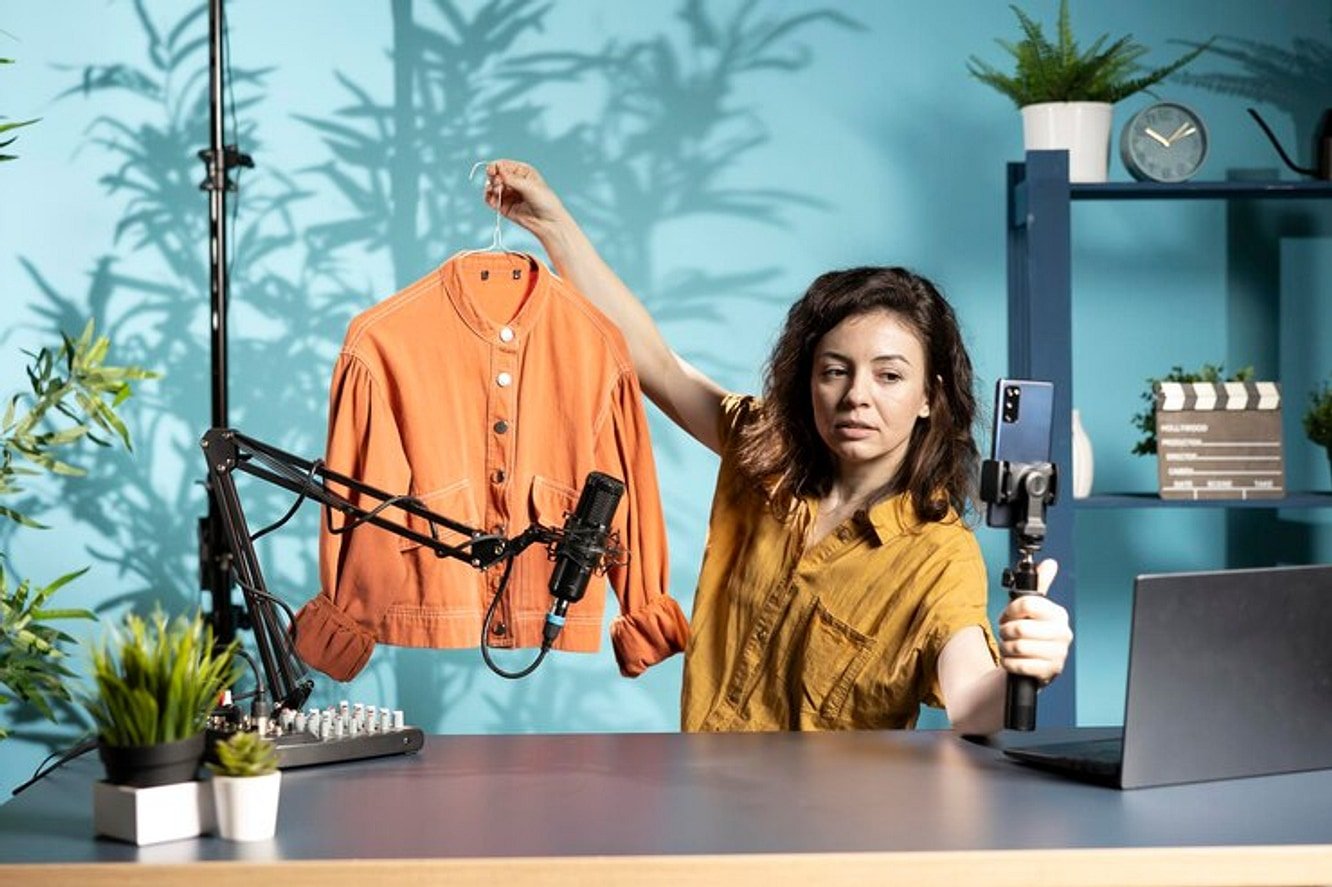
Why Smaller Influencers Are Making More Noise The landscape of influencer marketing is changing.
For years, influencer marketing was dominated by celebrity creators and massive audiences. The assumption was simple: more followers meant more influence.
But that equation is becoming harder to defend.
Today, many brands are discovering that a smaller creator with a highly relevant audience can generate more meaningful attention than a celebrity with millions of followers.
Micro-influencers often have something large creators struggle to maintain at scale: proximity to their audience.
They know the questions their followers ask. They understand the products their communities care about. They respond to comments, share personal experiences, and participate in conversations instead of simply broadcasting messages.
That creates an important advantage.
Micro-influencers typically have higher engagement rates, stronger connections with customers, and communities built around specific interests rather than general popularity.
For brands, the opportunity isn’t simply to reach fewer people for less money.
It is to reach the right people with a message that feels credible enough to matter.
Micro Influencers Are Winning Because of Relevance and Authenticity
Consumers are surrounded by marketing messages.
Ads follow them across websites. Sponsored posts appear in their social feeds. Products are promoted through videos, podcasts, newsletters, and creator content.
As the volume of marketing increases, attention becomes harder to earn.
This is where smaller creators can have an advantage.
Micro-influencers have an edge because their content often feels closer to a recommendation from someone within a community than a message delivered by a distant celebrity.
That doesn’t mean every micro-influencer is automatically authentic.
The real advantage comes from relevance, familiarity, and credibility.
A creator who has spent years talking about running shoes, skincare, personal finance, gaming, parenting, food, fitness, or local businesses can develop a level of subject familiarity that a general-interest celebrity may not have.
For brands, that distinction matters.
The question isn’t
“How many people can this influencer reach?”
It is:
“How much influence does this creator have with the people we actually want to reach?”
Why Smaller Influencers Have an Advantage
Micro-influencers tend to build their audiences around a shared interest, industry, community, lifestyle, or problem.
Their followers may have similar goals, hobbies, professions, purchasing habits, or interests.
That creates a highly concentrated audience.
These tight-knit communities allow influencers to offer recommendations that can feel more like advice from a knowledgeable peer than traditional advertising.
Their followers can ask questions.
They can disagree.
They can share their own experiences.
They can request product recommendations.
And creators can respond.
That interaction creates something valuable for brands:
context.
Instead of a product simply appearing in someone’s feed, it can become part of a conversation.
That can make the recommendation more memorable and more relevant.
Influence Is Built Through Relationships
Follower counts tell you how large an audience is.
They don’t necessarily tell you how closely connected that audience is to the creator.
Many micro-influencers spend significant time responding to comments, answering questions, participating in discussions, and learning what their followers care about.
Over time, that interaction can turn an audience into a community.
This matters when a creator recommends a product.
A follower who has watched the same creator for months or years doesn’t necessarily see every recommendation as an advertisement. They have already developed familiarity with the creator’s preferences, personality, and expertise.
That creates an important distinction:
Reach puts your message in front of people. Relationships make people pay attention to it.
When a creator genuinely uses and discusses a product over time, the recommendation can also become more credible than a single sponsored post.

Better Engagement Starts With Better Audience Alignment
Partnering with micro-influencers can help brands reach audiences that closely match their ideal customer profile.
Because smaller creators often specialize in a particular niche, marketers can select creators based on audience relevance, not simply follower count.
Look for communities where:
- Followers share common interests.
- The creator regularly discusses your category.
- People actively ask questions and participate.
- The audience has a genuine reason to care about your product.
- The creator’s communication style fits your brand.
- Sponsored content can appear naturally within their existing content.
This changes how influencer selection should work.
Instead of asking:
“Who has the biggest audience?”
Ask:
“Whose audience already has the problem our product solves?”
That question usually leads to better partnerships.
Smaller Audiences Can Create More Efficient Campaigns
Marketing budgets are under constant pressure.
Brands are expected to reach more people, generate stronger results, and prove the value of every campaign.
Working with micro-influencers can provide a more flexible approach.
Rather than putting most of a campaign budget behind one major creator, a brand can potentially work with several smaller creators across different communities.
That creates multiple opportunities to test:
- Different audiences
- Different content formats
- Different messaging
- Different geographic markets
- Different creator styles
- Different products or offers
The advantage isn’t simply that micro-influencers may cost less.
It is that a diversified creator strategy can give brands more opportunities to learn.
A campaign involving several relevant creators can reveal which audiences, messages, and content formats generate the strongest response.

The Value Goes Beyond Immediate Sales
Influencer campaigns are often judged by clicks, conversions, and revenue.
Those metrics matter.
But they don’t capture the entire value of creator partnerships.
A strong influencer campaign can also help a brand:
- Build awareness
- Introduce a product to a new community
- Explain how a product works
- Generate social proof
- Create reusable content
- Strengthen credibility
- Encourage conversations
- Increase branded searches
- Build long-term familiarity
Some of these benefits may appear later rather than immediately after a sponsored post.
Someone may discover a product through a creator today, research it next week, and purchase it a month later.
That is why influencer marketing should be evaluated as part of the broader customer journey rather than as a single transaction.
Turn Creator Content Into a Long-Term Asset
One of the most overlooked benefits of influencer marketing is the content itself.
The creator’s work doesn’t necessarily have to disappear after the campaign ends.
With appropriate permissions and usage rights, brands can potentially repurpose creator content across:
- Social media
- Websites
- Product pages
- Paid advertising
- Email campaigns
- Landing pages
- Educational content
This can be especially valuable because creator content often demonstrates products in real-world situations.
People can see how something looks, works, feels, or fits into someone’s daily life.
That makes creator content different from highly polished advertising.
The best partnerships don’t simply buy a post.
They create a library of authentic customer-facing content.
Word of Mouth Still Has Power
People often look to their communities for advice before making a purchasing decision.
They want to know:
Does this actually work?
What is it really like?
Would someone like me use it?
Is it worth the money?
Micro-influencers can help answer these questions through demonstrations, reviews, tutorials, comparisons, and personal experiences.
- They can demonstrate products in real situations.
- They can provide reviews based on personal experience.
- They can explain how products fit into their routines.
- They can answer questions from their audience.
- They can share lessons that traditional advertisements often overlook.
This makes influencer content particularly useful for products that require explanation or trust before purchase.
When audiences repeatedly encounter a brand through people they already follow, familiarity can increase.
And familiarity can reduce the uncertainty that often stands between interest and action.

Long-Term Partnerships Beat One-Off Promotions
A single sponsored post can create awareness.
A long-term creator relationship can create association.
When the same creator genuinely uses and discusses a product over time, the brand can become part of the creator’s normal content environment.
That is very different from a one-time advertisement.
Imagine seeing a creator recommend the same product repeatedly, demonstrate how they use it, answer questions about it, and mention its benefits months apart.
The brand starts to feel familiar.
But long-term partnerships only work when the relationship is credible.
Brands should give creators enough freedom to communicate in their own voice rather than forcing every post into rigid advertising language.
Consistency builds familiarity. Authenticity protects trust.
The strongest partnerships give creators a clear understanding of the brand while allowing them to remain themselves.
Use AI to Find Better Creator Matches
Finding the right influencers can be time-consuming.
Follower counts alone aren’t enough.
Brands increasingly need to examine audience quality, engagement patterns, content relevance, creator history, and potential brand fit.
Influencer databases and AI-powered platforms such as Tinfluencer can help marketers analyze creators at scale.
These technologies can potentially help identify:
- Audiences that match a brand’s ideal customer profile
- Engagement patterns that appear genuine
- Creators who consistently interact with their communities
- Potential audience-quality concerns
- Campaign opportunities based on historical data
- Signals that may help estimate campaign performance
The value of AI here isn’t replacing human judgment.
It is reducing the amount of manual research required before human judgment begins.
Technology can help narrow the list.
People still need to determine whether a creator is genuinely compatible with the brand.
Micro Influencers Understand Local Communities
Smaller creators can be especially valuable for brands targeting specific locations or tightly defined communities.
A creator who focuses on one city, neighborhood, profession, hobby, or cultural community may understand their audience in ways that large general-interest creators cannot.
They may know:
- The language their audience naturally uses
- Local preferences
- Community habits
- Relevant events
- Popular businesses
- Common concerns
- Purchasing behaviors
- Cultural context
That local knowledge can make a campaign feel far more relevant.
For location-based businesses, this can be particularly powerful.
A recommendation from someone who actually lives in or understands the community can carry a different kind of credibility than a generic national advertisement.
AI Will Change Influencer Marketing—But It Won’t Replace Influence
AI is likely to make influencer marketing more data-driven.
Brands can use technology to analyze large numbers of creators, identify audience patterns, detect suspicious engagement signals, compare performance data, and improve campaign planning.
It may help marketers:
- Identify unusual audience patterns.
- Detect potentially artificial engagement.
- Compare creator performance.
- Estimate campaign outcomes.
- Find creators who fit specific audience profiles.
- Make faster partnership decisions.
But AI cannot manufacture the most important ingredient in influencer marketing:
trust between a creator and their audience.
Technology can identify a promising creator.
It cannot guarantee that followers will believe the recommendation.
That still depends on relevance, credibility, consistency, and the relationship between creator and community.
The Campaign Isn’t Over When the Post Goes Live
One of the biggest mistakes brands make is treating the sponsored post as the finish line.
It isn’t.
The real value of creator marketing can continue after publication.
A campaign can generate:
- Search interest
- Brand awareness
- User-generated content
- Website visits
- Social conversations
- Product questions
- Retargeting audiences
- Additional creator opportunities
- Long-term brand familiarity
When influencers mention your brand, the conversation can continue beyond the original campaign period.
People may remember the brand later.
They may search for it.
They may discuss it with friends.
They may encounter another creator talking about the same product.
This is why influencer marketing should not be evaluated only by what happens on the day a post is published.
The strongest campaigns create momentum that continues after the sponsored content disappears from the feed.
Measure Influence, Not Just Impressions
Follower counts and impressions are easy to report.
They aren’t always the most useful measures of influence.
A smarter campaign evaluation should consider several layers of performance.
Reach
How many relevant people were exposed to the campaign?
Engagement
Did people comment, share, save, respond, or ask questions?
Intent
Did the campaign generate website visits, searches, product-page views, or sign-ups?
Action
Did people purchase, subscribe, book, or otherwise convert?
Brand impact
Did awareness, familiarity, or consideration increase?
Content value
Did the campaign produce creator content that can continue generating value?
This broader view helps brands understand whether they are buying attention or building influence.
Choose Influence Over Follower Count
The biggest lesson for brands is simple:
A large audience is not automatically a valuable audience.
A smaller creator with 20,000 highly relevant followers may be more valuable for a niche product than a celebrity with several million followers who have little connection to the category.
The right creator should bring three things together:
Audience relevance + genuine engagement + brand fit
When those three elements align, a smaller audience can become remarkably powerful.
The Future of Influencer Marketing Is Smaller, Smarter, and More Authentic
Influencer marketing is evolving because audiences are evolving.
People are becoming more selective about who they trust.
They want demonstrations rather than claims.
They want experiences rather than slogans.
They want recommendations that make sense for their lives.
And they increasingly recognize when sponsored content feels forced.
Micro-influencers have already mastered many of the behaviors that brands are now trying to build into their marketing: relevance, community, conversation, and authenticity.
That doesn’t mean large influencers no longer have value.
It means brands should stop assuming that bigger automatically means better.
Before investing the majority of your budget in one giant creator, consider what you could accomplish by building a network of smaller, highly relevant voices.
You may reach fewer people with each individual creator.
But you may reach people who are more relevant, more engaged, and more likely to listen.
And in modern influencer marketing, attention isn’t the scarce resource—trusted attention is.
Before you go investing all of your money into one giant influencer. Stop and consider how much more you can actually accomplish by going smaller.




[…] No code technology is empowering the masses. Businesses who adopt no code technology will innovate faster, solve problems more efficiently, and unleash creativity from every department. […]